EWRS travel grants for bilateral cooperation 2025 - Report Elansurya Elangovan Vennila
Posted on October 11th, 2026 on 23:36:07 by Aleksandra Savić
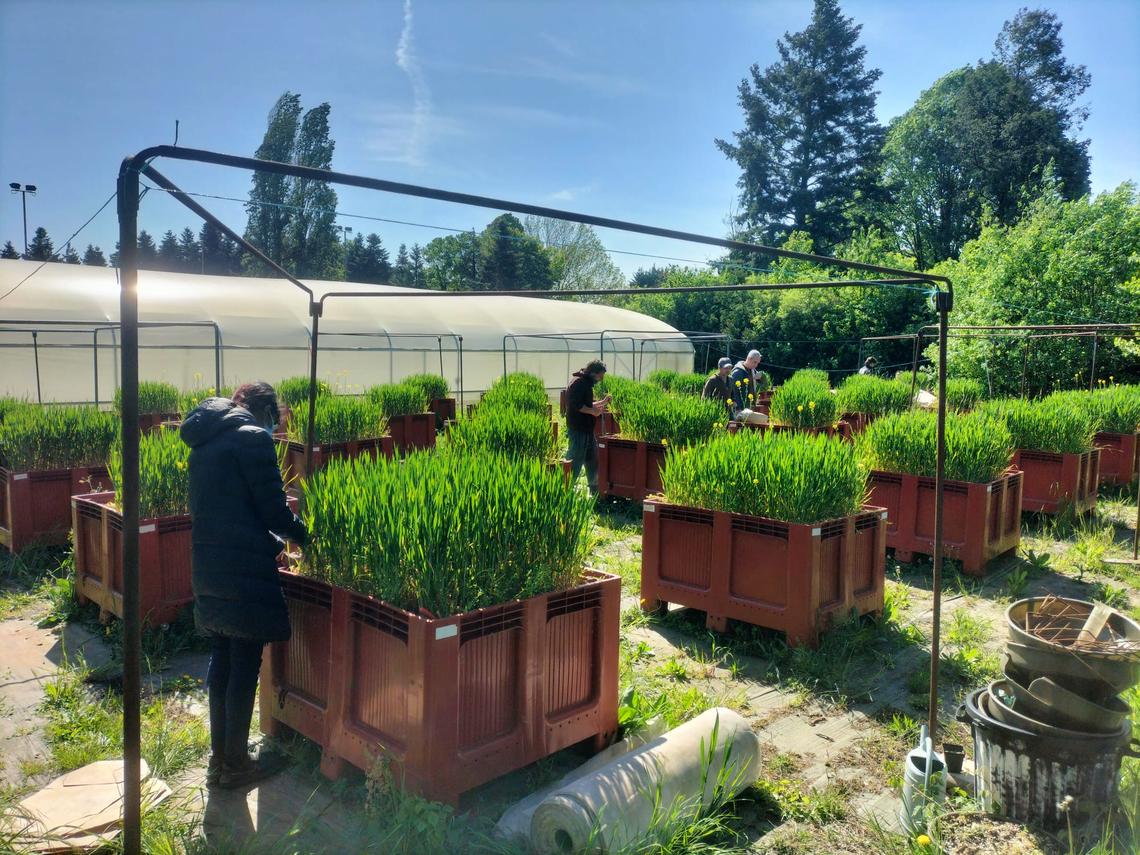
The PhD student Elansurya Elangovan Vennila reports about her exchange experience financed by EWRS
Report on the outcomes of a Scientific Mission
EWRS travel grants for bilateral cooperation 2025
Grantee name: Elansurya Elangovan Vennila
Home institution: Universitat Politècnica de Catalunya (UPC), Barcelona, Spain
Mentor (home institution): Jordi Izquierdo Figarola
Host institution: Institut national de recherche pour l’agriculture, l’alimentation et l’environnement (INRAE), Dijon, France
Mentor (host institution): Guillaume Adeux
Details of the EWRS travel grant
Title of project: Exploring intransitive interactions in weed competition and crop-weed dynamics
Start and end date: 06/04/2026 to 24/04/2026
Introduce your project's general subject or topic
This scientific research exchange focused on advancing the understanding of crop-weed competition from functional and community-ecology perspectives, with particular emphasis on evaluating the potential role of non-hierarchical, intransitive competition networks in shaping weed communities associated with winter wheat. Conventional paradigms in weed ecology predominantly assume a hierarchical competitive structure, in which dominant species with superior competitive traits consistently outcompete, suppress, or exclude weaker competitors. However, interactions among multiple weed species may instead exhibit intransitive dynamics, analogous to rock-paper-scissors networks, in which no single species consistently functions as the strongest competitor. In such complex ecological networks, a subordinate species that exerts a relatively minor competitive effect on the crop may nevertheless suppress a highly aggressive, more competitive weed species, potentially buffering crop yield loss through indirect interactions—reflecting the principle that “an enemy of an enemy is a friend”. Thus, understanding the structure and mechanisms of weed-weed interactions may provide new insights into crop-weed competition and contribute to the development of more sustainable approaches to weed management.
Clearly state your project's objectives
The primary objective of this research exchange was to strengthen my doctoral research on weed-crop competition by analysing how weed functional traits and interactions among weed species influence crop performance. A central hypothesis was that subordinate weed species, typically characterised by rapid early growth and creeping growth habits, may suppress long-cycle, tall-growing, highly competitive weed species, thereby potentially reducing their negative effects on winter wheat yield. While my thesis primarily examines functional assemblages in weed communities as a whole, the exchange provided an opportunity to complement this community-level perspective by examining interactions among individual weed species and the mechanisms underlying these interactions. A further objective was to gain practical experience in monitoring, sampling, and interpreting a mesocosm experiment, while fostering scientific exchange with INRAE researchers and developing my skills in trait measurement, functional ecology, experimental design, and statistical data analysis. The stay also aimed to broaden my understanding of sustainable weed management through exposure to research on weed seedbank dynamics, cropping system diversification, intercropping, and strategies for reduced herbicide use.
Description of the work carried out during the EWRS travel grant
During the research exchange at INRAE, I was actively involved in experimental work, field observations, and scientific mentoring sessions. A substantial part of the stay was devoted to monitoring and sampling an ongoing mesocosm experiment established in 36 geoboxes comprising nine treatments with four replicates each. The experimental setup consisted of winter wheat grown alone and in combination with weed species representing contrasting competitive strategies: the highly competitive species Sinapis alba L. and Alopecurus myosuroides Huds., and the less competitive species Veronica persica Poir., and Veronica hederifolia L.
The mesocosm trial included wheat monocultures, single-species weed combinations, and multi-species mixtures in which a Veronica species was grown with either S. alba or A. myosuroides. These treatments were designed to assess whether subordinate weed species could suppress more competitive species and thereby modify their effects on wheat performance. Watering regimes were regulated to ensure plant survival and growth across treatments, while avoiding severe water limitation that could obscure the effects of plant-plant interactions. I contributed to measurements of crop and weed height at the crop pre-heading stage, with plant heights recorded from randomly selected individuals across different sections of each mesocosm. These measurements provided information on differences in growth and vertical canopy structure, which are relevant to potential light competition among species. To safeguard against risks associated with unforeseen issues, a split-harvest strategy was implemented wherein one half of each geobox was harvested at the crop pre-heading stage, while the remaining half was maintained until crop maturity. The central row of each geobox served as an isolation buffer between the two sampling areas. During the first harvest, S. alba individuals were categorised and counted according to size class, while V. hederifolia, A. myosuroides, and wheat were harvested separately. Plant material was collected by species in individual bags and transferred to the drying facility for subsequent determination of dry biomass. I was also introduced to non-destructive image-based monitoring conducted across successive crop developmental stages to assess plant cover and distinguish crop from weed foliage.
In addition to the mesocosm experiment, I gained exposure to complementary research activities at INRAE. I observed soil washing techniques and the preparation of greenhouse seedling emergence trays, and contributed to the identification and counting of emerging weed seedlings to assess seedbank composition and potential. I also visited the INRAE experimental station to observe field trials examining cropping system diversification, including crop rotations, crop varieties, mixed cropping, and cereal-legume intercropping systems, as well as specialised plots dedicated to the conservation of rare arable weed species. In addition, I attended a scientific conference on soil biodiversity, which broadened my exposure to research on soil biodiversity and agroecosystem functioning. Throughout the exchange, I also had extensive scientific discussions with my mentor and other researchers at INRAE regarding my PhD research, particularly the mechanisms underlying community-level interactions, analytical frameworks for statistical modelling, and the interpretation of experimental results.
Description of the main achievements
The scientific exchange achieved its principal objectives by combining first-hand experience in an ongoing mesocosm experiment with scientific discussions and exposure to a broader range of agroecological research at INRAE. Investigating multi-species weed combinations beyond simple pairwise crop-weed models provided a valuable perspective on how interactions among weed species can indirectly influence crop performance. Preliminary observations from the mesocosm experiment, including treatments containing both Veronica and A. myosuroides, indicated that the presence of a subordinate species may suppress the competitive weed, thereby mitigating its negative effects on wheat, although the competitive effects of A. myosuroides on wheat were not completely eliminated. In addition, the practical work strengthened my knowledge of mesocosm experimental procedures, standardised plant sampling, destructive biomass measurements, plant height assessment, weed seedling identification, and seedbank assessment. The scientific discussions further developed my understanding of statistical approaches and the interpretation of plant-plant interactions. Overall, the exchange provided a valuable opportunity to extend the community-level perspective of my doctoral research toward the mechanisms underlying interactions among individual weed species and their impacts on crop performance.
Specify precisely your contribution through the research exchange and what knowledge and skills you acquired
My main contribution centred on the practical monitoring and sampling of the mesocosm experiment. I participated in standardised measurements of wheat and weed height, assisted with harvesting the experimental mesocosms prior to heading, sorted and counted S. alba plants according to size class, and harvested and separated V. hederifolia, A. myosuroides, and wheat biomass for subsequent drying and weighing. I also assisted in identifying and counting germinated weed species in greenhouse seedbank trays. Through these activities, I acquired practical skills in experimental plant sampling, biomass processing, standardised plant measurements, and weed seedling identification. Conceptually, the exchange deepened my understanding of multi-species competition networks, enabling me to connect plant functional traits, weed-weed interactions, community structure, and crop performance. This provided a complementary perspective to my doctoral research, which primarily examines weed communities as functional assemblages, by encouraging me to consider the mechanisms operating among individual species within those communities. The research exchange therefore strengthened both my technical research skills and my understanding of crop-weed interactions, while providing valuable experience of how experimental research is conducted within a large agroecological research programme. The combination of experimental participation, scientific mentoring, and exposure to complementary research areas has contributed to my development as a researcher working on crop-weed interactions and sustainable weed management.
Pictures:
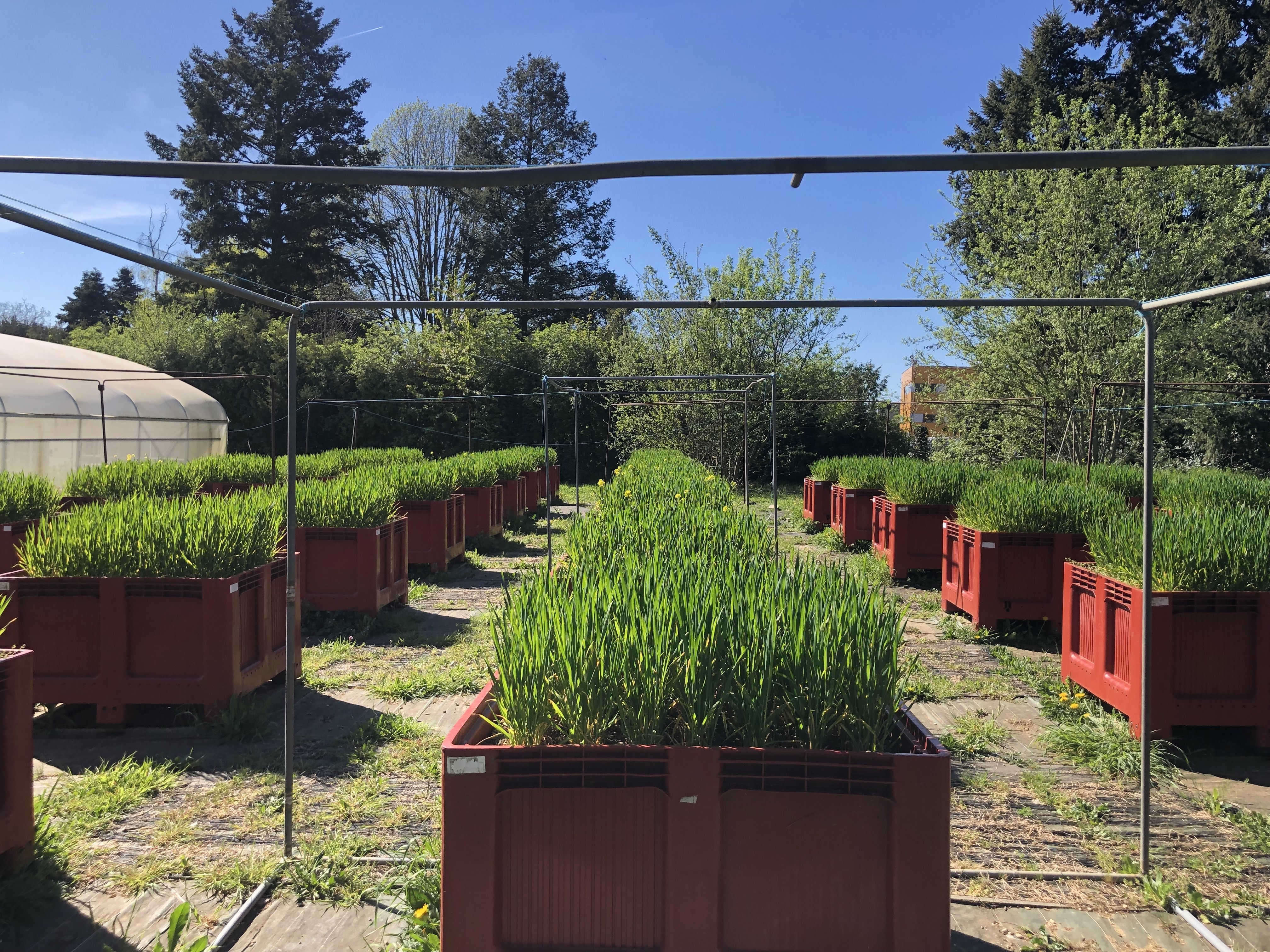
Picture 1: Overview of the mesocosm experiment conducted in geoboxes, showing winter wheat grown in monoculture and in combination with weed species with contrasting competitive abilities.
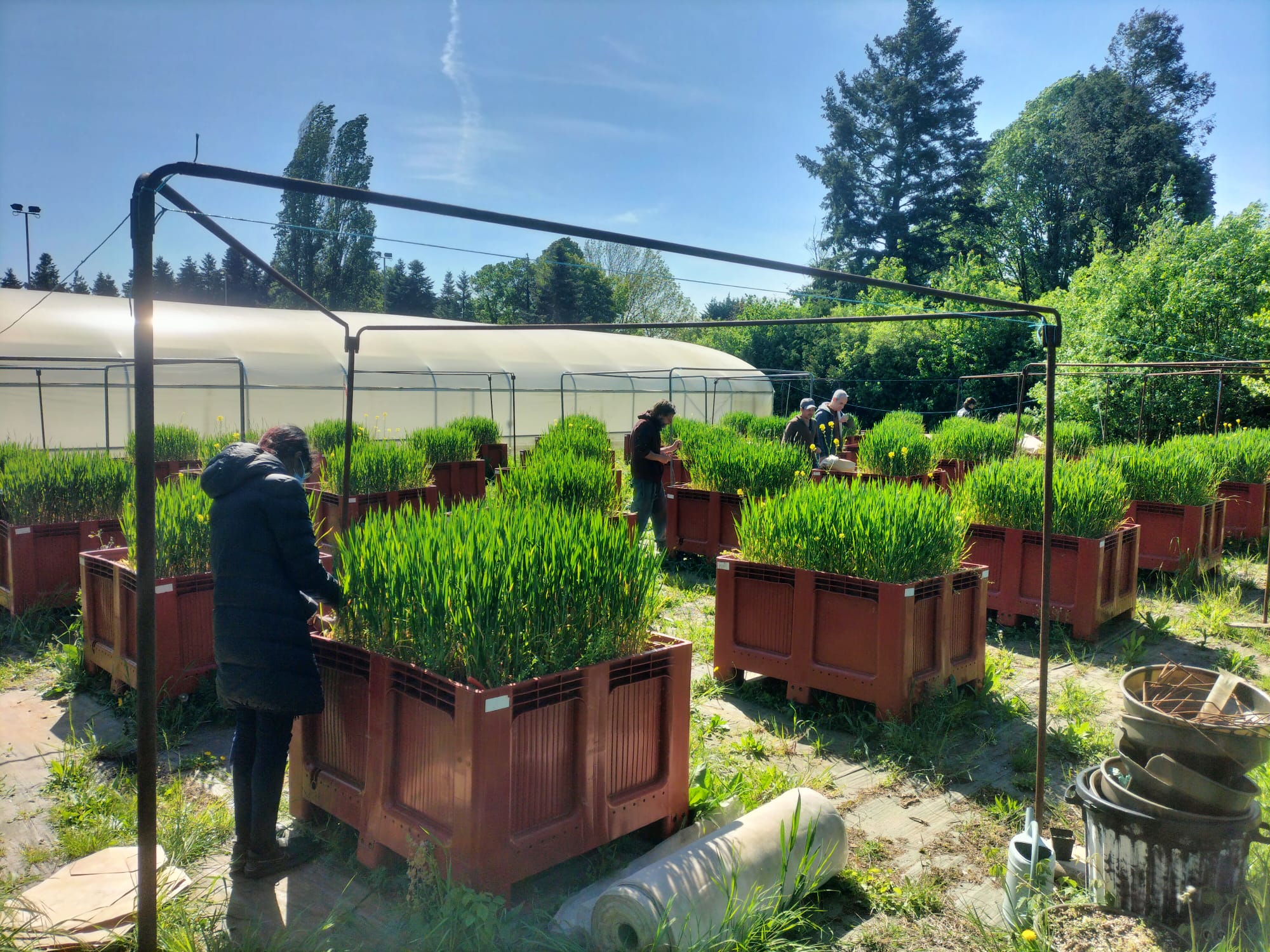
Picture 2: Sampling and harvesting of the mesocosms at the crop pre-heading stage
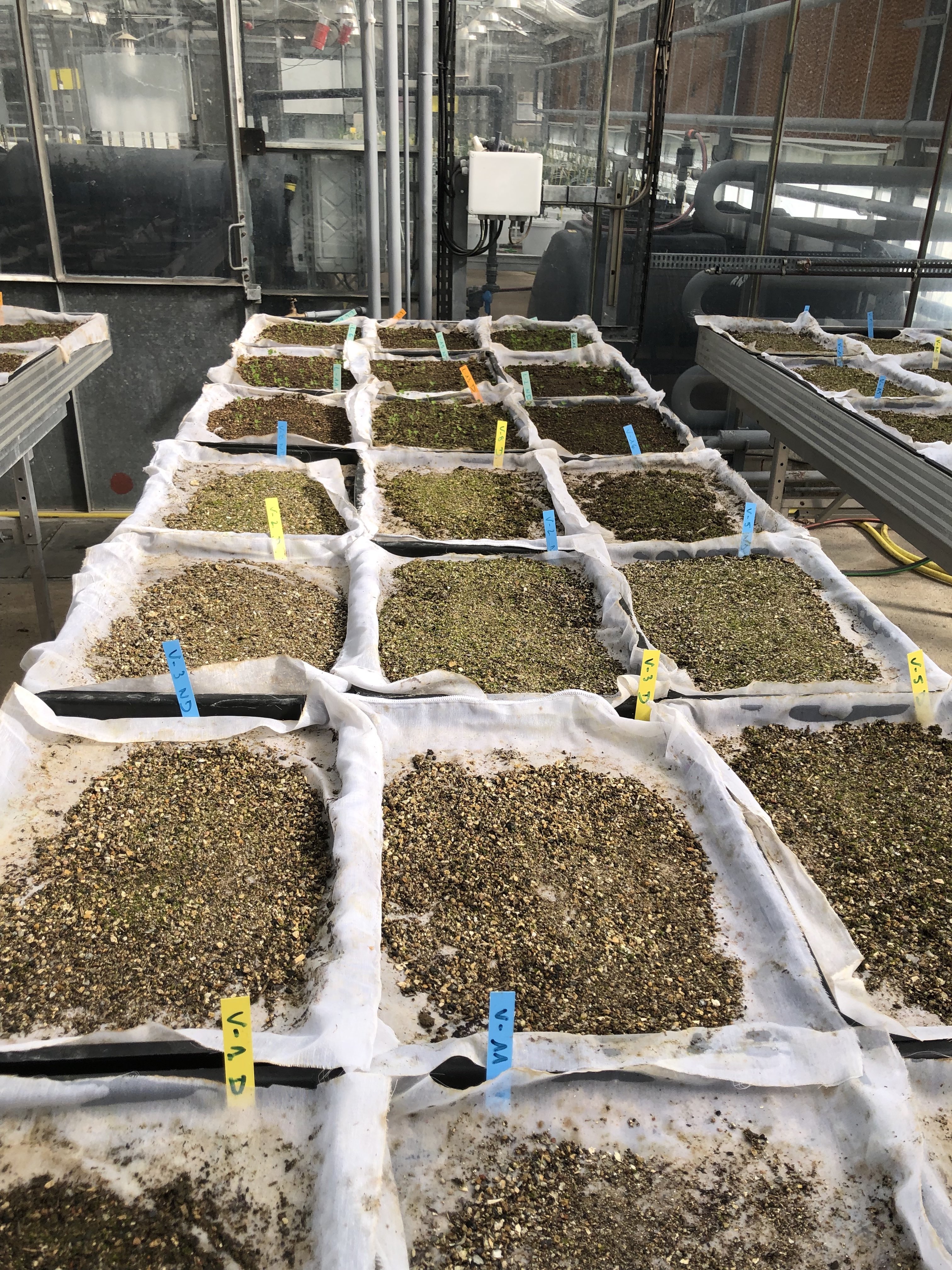
Picture 3: Greenhouse experiment for assessing the soil weed seedbank.
36 x viewed | 0 Likes -
Message to the author

Filter by theme
Filter by Working Group
How can I submit a post?
We would like to welcome you as a contributing author for the EWRS blog. Please contact the Communication Officer, Camilla Moonen. She can give you writing access to the blog. After that, you can start writing articles for the blog, from the 'My Account page'. More information can be found on the "How to use the Blog page".